Led by jazz talent development organisation and creative producers Tomorrow’s Warriors, this unique celebration charts the impact of the Harlem Renaissance of the mid-1920s.
The Harlem Renaissance was a seismic cultural revolution that shook a city and woke up a nation, the effects of which can still be felt across the world to this day. To celebrate this seminal creative explosion Tomorrow’s Warriors have created an ambitious and innovative programme of music, dance, and discussion.
The project will premiere at The Queen Elizabeth Hall, Southbank Centre, London on Saturday 13th September.
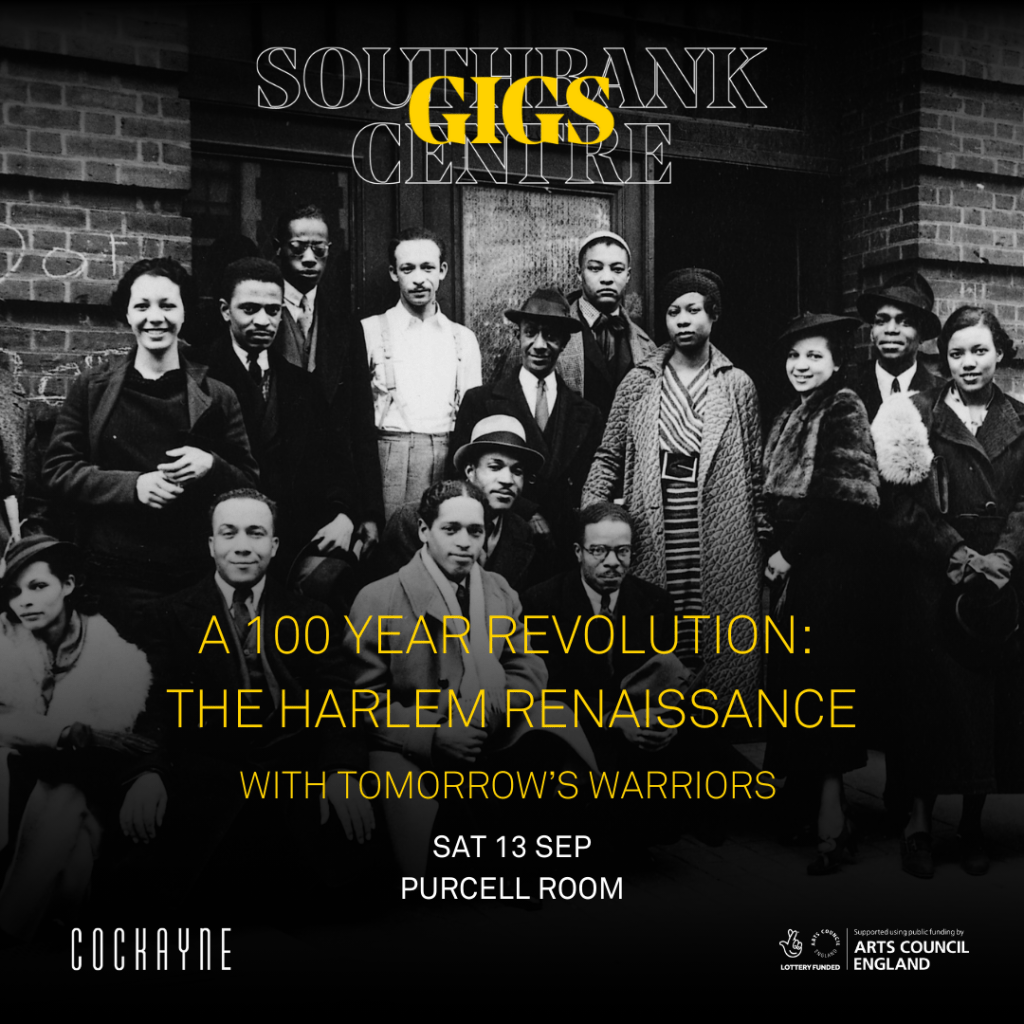
The celebration will begin with A 100 Year Revolution: The Harlem Renaissance – a panel discussion at 2.00pm in the Purcell Room at Southbank Centre, tracing the 100-year cultural impact of the Harlem Renaissance and its relevance today. Panellists include Bonnie Greer OBE, Margaret Busby CBE, Soweto Kinch and Kevin Le Gendre. The discussion will explore the origins of the Harlem Renaissance and how the Black creative revolution in 1920s New York transformed the world. Topics will include the cultural influence on Black British identity, the impact of transatlantic artistic exchanges and the role of the creative arts in cultural solidarity.
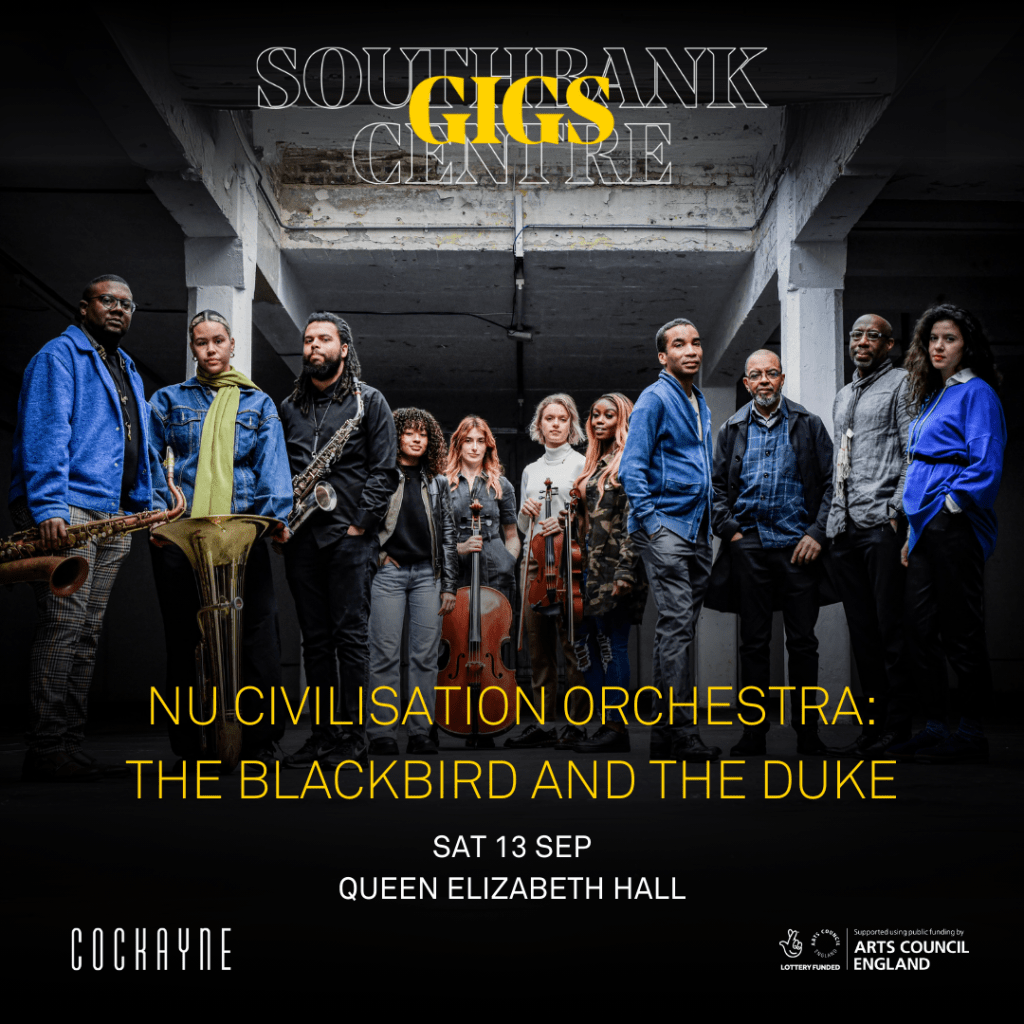
For the second half of the celebration Nu Civilisation Orchestra will perform a specially curated programme of Duke Ellington’s music and shine a spotlight on Florence Mills. Although Ellington and Mills never formally collaborated, their lives were entwined in the Black cultural revolution of the Harlem Renaissance in mid-1920s New York.
The concert will begin with the premiere of The Blackbird of Harlem, a staged concert telling the incredible story of the trailblazing international artist and activist, Florence Mills through narration, music, dance, and visuals featuring Bonnie Greer OBE (playwright, author, broadcaster, critic), CHERISE (artist and composer) and dancer/choreographer Valerie Ebuwa (Clod Ensemble).
Florence Mills’ story of outstanding talent, the pursuit of equality and extraordinary resilience is brought to life by Creative Director and dramaturg Patricia Cumper. From Florence’s early years in Vaudeville, through to her performances on Broadway in Shuffle Along and subsequent international headline shows, The Blackbird of Harlem tells the little-known story of the life of the singer, dancer, and formidable campaigner for equal rights for African Americans.
Bonnie Greer explains why Florence’s story resonates so strongly with her:
“There’s something so poignant about seeing a young woman—specifically, a young Black woman—on stage, singing. For me, it’s incredibly moving. Maybe it’s because I’m an older Black woman myself, and when I see a young Black woman up there, it touches me deeply.
It’s powerful. It’s courageous.
She was a courageous little thing. Strong, yet fragile at the same time. And she wasn’t afraid to show that fragility. Some people saw it and took advantage of it, but that vulnerability – that softness – is so important, especially for Black girls.
But Florence was unforgettable. She was beautiful. She stepped to the front of the line and did her thing with courage. She supported her whole family. And that’s why people remember her.
Florence Mills’ story needs to be told, not just as a tribute to her brilliance, but as a mirror held up to a history that continues to repeat itself. She embodies a legacy of young Black women who give everything to their art, only to be consumed by the very systems that celebrate them. From Billie Holiday to Whitney Houston, and so many others, these are artists whose light burned brightly, but often too briefly.
Florence’s story is not just history; it’s a living reality for many today. Her life reminds us of the cost of brilliance in a world that too often fails to protect its most luminous souls. And it calls on us to do better – for the artists of today, and for those still to come.”
The second half of the concert features two of Duke Ellington’s seminal pieces that chart the impact of the influential New York district, A Tone Parallel to Harlem and Black, Brown and Beige.
Ellington composed A Tone Parallel to Harlem in 1951, capturing the transformative essence and soundscape of the times. Black, Brown and Beige charts the social narrative of African American history through music. From the burden and oppression of Work Song and the prayer for salvation of Come Sunday, the story shifts to the patriotic Black Americans fighting in the Revolutionary and Civil wars. The final chapter covers the Great Migration and the movement of Black Americans into the city – arriving in Harlem, hungry for a cultural awakening and revolution, that would shape the identity of African Americans to this day.
Supported through Tomorrow’s Warriors by Cockayne Grants for the Arts, a Donor Advised Fund, held at The Prism Charitable Trust.

 nu civilisation orchestra